Algeria
The Day of the JackalAlgeria is the contested territory at the heart of the political rupture in The Day of the Jackal: for officers who oppose Charles de Gaulle, its loss becomes proof of betrayal and the cause of a continuing war against his government. The novel presents the country not simply as a battlefield but as a claim over which competing ideas of France collide. The withdrawal leaves defeat, exile, and a clandestine campaign in its wake, carrying Algeria’s conflict into the later plot to assassinate de Gaulle.
A territory claimed as France
For Marc Rodin, Algeria is not a distant possession that can be relinquished. He regards it as part of France, inhabited by three million French people, and believes it should be defended as French regions such as Normandy and Brittany would be. This conviction gives his campaign its moral vocabulary: in his eyes, fighting for Algeria means defending France itself. The novel sets that certainty against the political decision to yield the territory to Algerian nationalists, a decision that Rodin interprets as another betrayal of the Army.
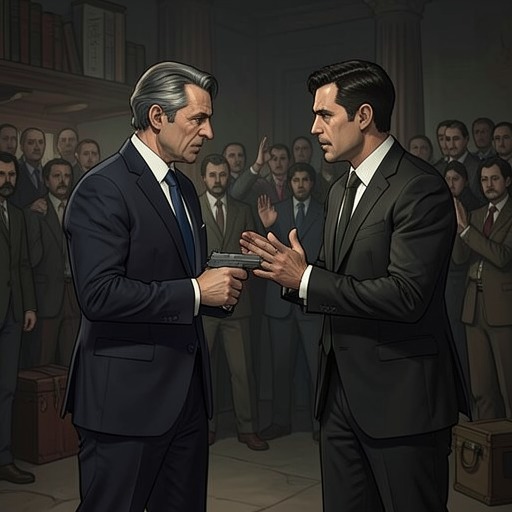
Jean-Marie Bastien-Thiry shares the accusation from a different position. A married Air Ministry official with three children, he has not personally lost anything through the loss of Algeria. His hostility to de Gaulle instead rests on his belief that the president betrayed France and the men who had called him back to power in 1958 by yielding the territory. The distinction matters: Algeria’s loss is presented as a political cause that can command fervent allegiance even from someone without a personal stake in it. Bastien-Thiry sees the assassination he helps plan as patriotic service, while the novel shows how that conviction links the country’s fate to violence against the French state.
Rodin’s military experience
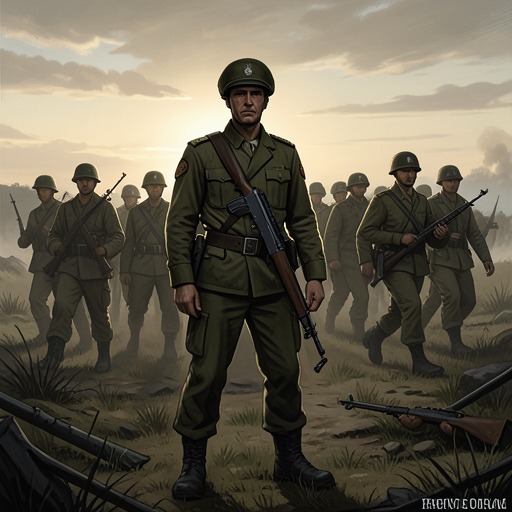
Rodin’s attachment to Algeria grows from his earlier experience in Indochina. Convinced that France could have won there with adequate support, he sees the cession of Indochina as a betrayal of the soldiers who died. When he leaves Marseilles for Algeria in the spring of 1956, he believes the new campaign will vindicate the French Army and restore its standing. Algeria becomes, in his imagination, the place where the Army can complete the work that political retreat had interrupted elsewhere.
His experience on the ground does not dislodge that belief. In the countryside, Rodin fights the soldiers of the National Liberation Army. As a lieutenant-colonel, he moves from the rural fighting into the cities, first to Bone and then to Constantine. There the conflict takes a different form: bombs are planted in places frequented by French civilians, including cafes, supermarkets, and playgrounds. Rodin’s harsh measures against those he considers responsible earn him the name Butcher in the Casbah. The novel presents the city war as an escalation that reinforces his certainty rather than moderating it; he treats the costs and worsening prospects of the campaign as secondary to the conviction that more support could still bring victory.
Defeat, flight, and exile
The decisive reversal comes when the mutiny is broken by radio. Rodin retains 120 officers, non-commissioned officers, and enlisted men, more than some commanders, partly because his unit contains a high proportion of veterans from Indochina and the Algerian countryside. With other putschists, they form the Secret Army Organisation, pledged to overthrow de Gaulle. Algeria’s political defeat has thus produced a new organization, one that carries armed resistance beyond the territory it has lost.
In the final seven weeks, as French settlers sell their life’s work cheaply and flee the war-torn coast, Rodin’s Secret Army exacts a final revenge on what they are leaving behind. Afterward, the leaders whose identities are known to the Gaullist authorities have only exile. Rodin becomes deputy to Antoine Argoud, the OAS operations chief in exile, bringing organizational skill and practical calculation to a campaign whose political origin remains the struggle over Algeria. The sequence—from contested territory to retreat, flight, clandestine violence, and exile—makes the end of French rule a continuing cause rather than a closed episode.
Algeria’s afterlife in the plot
The country’s importance persists even when the action turns elsewhere. For Rodin, Algeria is the proof that France’s politicians will abandon soldiers and territory; for Bastien-Thiry, it is the betrayal that makes killing de Gaulle seem patriotic. Their conclusions help explain how opponents of the president move from a lost war to an assassination conspiracy. Algeria therefore functions as the political history behind the novel’s present danger: the plot against de Gaulle is not detached from the conflict but grows out of a refusal to accept its outcome.
That history also gives the assassination threat its wider stakes. When Claude Lebel asks foreign police to consider professional political assassins, he withholds the target’s name while making clear that the case concerns a figure of exceptional importance. The investigation later treats the exposed conspiracy as a plan against the President of France. Algeria is not the scene of that manhunt, but the dispute over its fate supplies the motive that connects the exiled Secret Army Organisation to the threat pursued across borders. In the novel’s structure, the territory is both the original ground of conflict and the political memory that follows its surviving combatants into exile.